Topology discovery
Build a live network map from device and routing information.
Smart India Hackathon / Network systems
A network discovery and monitoring system built for GAIL India, winner of Smart India Hackathon.
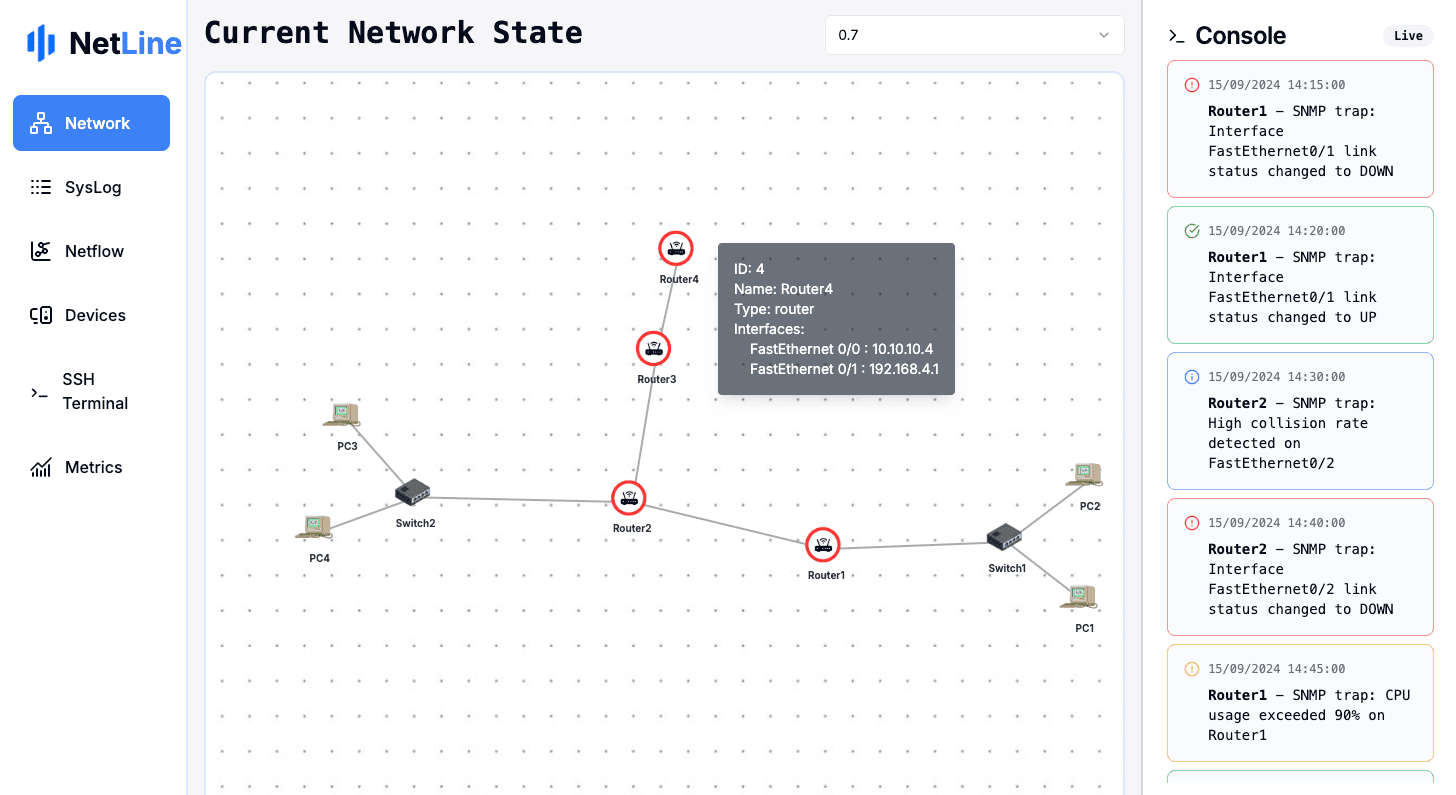
The operator view
Industrial network teams need to understand topology, device state, and traffic changes without manually reconciling equipment and interface data.
NetLine continuously discovers the network and turns low-level protocol information into a live topology that operators can inspect, monitor, and use during investigation.
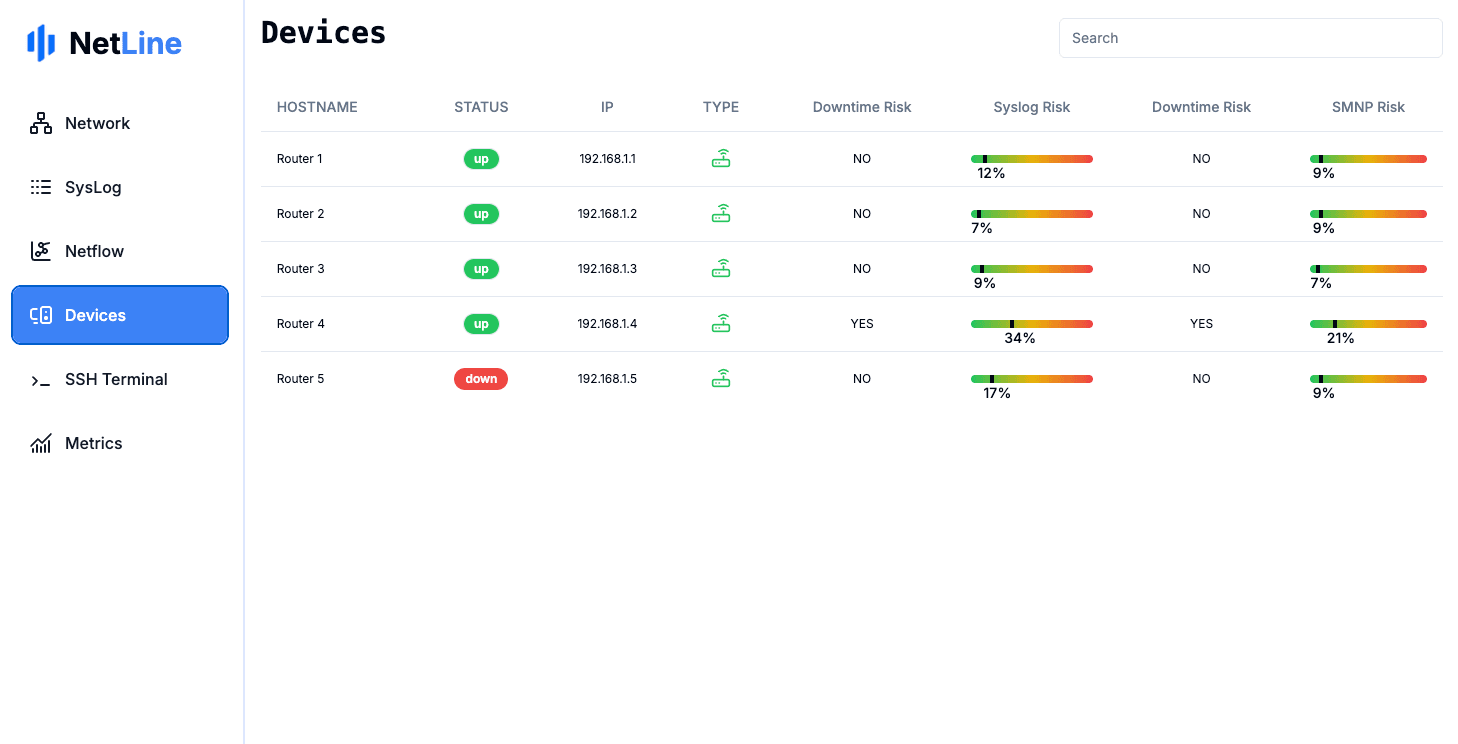
Build a live network map from device and routing information.
Track device, interface, and adjacency changes as the network evolves.
Surface flow and operational events alongside topology context.
Explore the network through an interactive D3 interface with live updates.
Build notes
I built across network discovery, backend services, data modeling, real-time delivery, and the interactive topology experience used for the final system.
The map is not a static diagram. Devices, interfaces, and adjacencies have identities and updates so a change can be attached to the object it affected.
Protocol collectors return different shapes. The backend turns those records into one topology model before D3 receives them.
WebSocket updates keep the visible network current without replacing the entire graph every time a signal arrives.
Operational data becomes useful when every event is attached to the topology it changed.
The public repository preserves the hackathon build, and its README was never rewritten into proper system documentation.
The demo could not reproduce every vendor, permission model, and failure mode found inside a live industrial network.
Production SCADA access would require much stricter credential handling, network isolation, audit controls, and deployment validation.